Buying jeans online shouldn’t feel like a gamble. If you know exactly how jeans should fit at the waist, seat, thighs, and length, you can confidently choose the right pair the first time.
This complete jeans fit checklist breaks everything down clearly for both men and women.
The Quick Jeans Fit Checklist
Before we go deep, here’s the high-level rule:
- Waist: Snug, but not tight. No gapping. No digging.
- Seat: Smooth and contouring. No sagging or pulling.
- Thighs: Close to the body without restricting movement.
- Length: Clean break. No excessive stacking or puddling.
- Comfort: Slightly fitted at first, but never painful.
Now let’s go section by section.
1. How Should Jeans Fit at the Waist?

Jeans should sit securely at your waist without needing a belt, but they should not feel tight or restrictive.
Waist Fit Checklist
- You can fit one or two fingers inside the waistband, but not your whole hand.
- The waistband lies flat against your body.
- No major gap at the back.
- You can sit comfortably without pinching.
If you feel pressure or difficulty breathing, they’re too tight. If you can pull them out several inches, they’re too loose.
For Men

Men’s jeans typically sit slightly below the natural waist unless designed as high-rise. They should feel tailored, not compressive.
Common men’s fits include:
- Straight: Relaxed through the hips and thighs with a straight leg opening. Ideal for men with bigger thighs, athletic builds, or anyone who prefers more room.
- Slim: Slim through the hips with a slight taper at the hem. Creates a long, lean silhouette that flatters most body types.
- Skinny: More form-fitting with a narrower leg from hip to hem, yet still flexible enough to move comfortably.
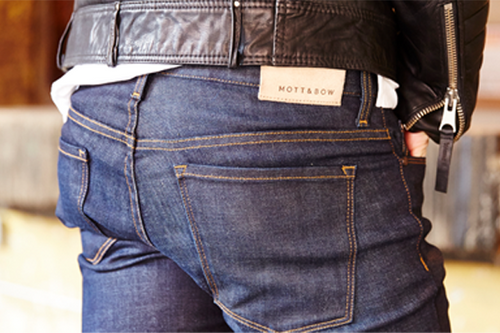
At Mott & Bow, our men’s jeans are engineered to align with these fit principles, offering Straight, Slim, and Skinny options with multiple inseam lengths to help you achieve a secure waist and clean silhouette without discomfort.
For Women
Rise plays a larger role in shaping, support, and overall comfort.
Common women’s fits include:

- Slim Straight: Straighter through the waist and hips with a slimmer leg. Sits 2" below your natural waist and is universally flattering on hourglass, apple, and athletic body types.
- Mid-Rise Skinny: Sits 1-1/2" below your natural waist and is fitted through the hips, thighs, and legs for a sculpted silhouette.
- High-Rise Skinny: Sits at your natural waist and hugs the hips and thighs while accentuating curves and elongating the legs.
- Mom Jeans: High-waisted, snug through the waist and hips, relaxed through the thighs, and tapered toward the hem.
You can find that our high-rise, mid-rise, slim straight, and mom jeans are designed to follow these exact fit standards, helping ensure the waistband stays secure while maintaining comfort and structure throughout the day.
2. How Should Jeans Fit in the Seat?

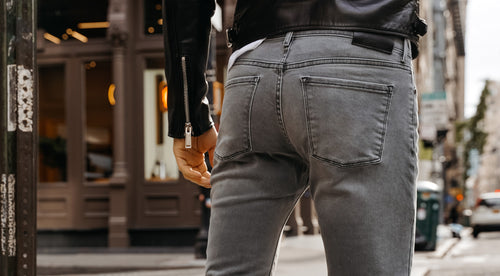
The seat should contour your shape without sagging, pulling, or wrinkling excessively.
Seat Fit Checklist
- No horizontal pulling lines under the back pockets.
- No sagging fabric beneath the seat.
- The back lies smooth when standing.
- You can sit without tight strain across the hips.
If the fabric pulls tightly across the back, size up. If it droops or folds under your seat, size down or try a slimmer cut.
For women, strategic pocket placement and a clean rear shape can also enhance lift and structure.
3. How Should Jeans Fit in the Thighs?

Jeans should sit close to your thighs but still allow full movement.
Thigh Fit Checklist
- Fabric lightly skims your legs.
- You can squat or sit comfortably.
- No extreme pulling at the front.
- No excess bunching.
If the thighs feel tight when you walk or sit, they’re too small.
If you see loose folds of fabric, they’re too relaxed for your body type.
Fit Differences
- Slim fit: Tapered and closer to the leg.
- Straight fit: More room through hips and thighs.
- Skinny fit: Closest cut, but still flexible.
- Mom jeans: Relaxed through thighs with a high waist.
- Slim straight (women): Straighter through hips with a refined leg line.
Your body type and comfort preference determine which silhouette works best.
4. How Long Should Jeans Be?

Jeans should have a clean break at the shoe with minimal stacking.
Length Fit Checklist
- Slight or single break at the shoe.
- No excessive fabric pooling at the ankle.
- No exposed ankle unless intentionally cropped.
- No dragging on the ground.
For Men
- 30" inseam: Under 5'10"
- 32" inseam: 5'10" to 6'1"
- 34" inseam: 6'1" to 6'4"
Choosing the correct inseam eliminates tailoring and prevents stacking.
Mott & Bow men’s jeans come in 30", 32", and 34" inseam options, making it easier to get a precise length without post-purchase alterations.
For Women
- 28" inseam: 4'10" to 5'3"
- 30" inseam: 5'4" to 5'8"
- 32" inseam: 5'9" to 6'1"
Length should complement your footwear and overall silhouette.
Across select fits, women’s jeans from Mott & Bow are available in 28", 30", and 32" inseams, helping reduce excess stacking and the need for tailoring.
5. How Should Jeans Fit for Men vs Women?

The core principles stay the same: secure waist, smooth seat, comfortable thighs, clean length.
The differences lie in structure and rise.
Men's Jeans
- Emphasis on tailored waist and structured seat.
- Slight taper through the leg for a polished look.
- Stretch level influences mobility and comfort.
Women's Jeans
- Rise plays a larger role in shaping and support.
- High-rise styles offer waist definition.
- Stretch levels range from comfort stretch to compression.
In both cases, jeans should enhance your shape without restricting movement.
6. Should Jeans Feel Tight at First?
Slightly snug is normal. Painfully tight is not. Denim, especially with stretch, relaxes slightly after a few wears.
Good signs:
- Snug at the waist but comfortable.
- Slightly fitted through hips and thighs.
- Comfortable when sitting.
Bad signs:
- Red marks at the waist.
- Difficulty bending.
- Restricted breathing.
Jeans should feel supportive, not suffocating.
The Role of Stretch in Proper Jeans Fit

Stretch dramatically impacts how jeans feel, move, and retain their shape throughout the day.
While stretch percentages vary across brands, the classifications below reflect how Mott & Bow structures its denim to deliver progressively higher levels of flexibility and performance.
For Men
Mott & Bow stretch levels include:

- Comfort Stretch (5 to 25%): Designed for everyday wear. Offers flexibility for the office, errands, casual outings, and relaxed days without losing structure.
- Dynamic Stretch (26 to 35%): Built for movement and long days. Ideal for travel, road trips, flights, and demanding schedules where comfort and resilience matter.
- 4-Way Stretch (35%+): High-performance denim that stretches both horizontally and vertically. Engineered for maximum mobility, including active settings.
Each tier increases flexibility while maintaining shape retention, so jeans stay supportive rather than sagging.
For Women
Mott & Bow stretch levels include:

- Comfort Stretch (5 to 25%): Ideal for daily wear. Provides ease of movement for errands, casual meet-ups, or all-day comfort.
- Power Stretch (26 to 35%): Designed for multitasking and travel. Supports busy schedules while maintaining structure and a flattering silhouette.
- Super Power Stretch (36%+): Built for action. Offers multidirectional stretch for enhanced flexibility and sculpting support.
Across all levels, the goal remains the same: jeans should adapt to your movement without losing their fit, shape, or structure.
How to Get the Right Fit the First Time

If you’re buying online, sizing tools can reduce guesswork.
At Mott & Bow, our fits are engineered for real proportions, and we offer multiple inseam options for both men and women. We also provide a sizing tool that helps recommend your ideal size based on your body type and preferred fit.
That combination makes finding your proper jeans fit far more predictable.
Final Fit Rule
The perfect jeans should:
- Stay in place at the waist
- Lie smooth through the seat
- Move comfortably through the thighs
- Break cleanly at the shoe
- Feel supportive, not restrictive
When all five align, you’ve found your perfect fit.
FAQs
How tight should jeans be?
Jeans should feel snug but not restrictive. You should be able to sit, bend, and breathe comfortably without pinching at the waist.
How should jeans fit at the waist?
They should sit securely without gapping or digging. One to two fingers should fit inside the waistband.
Should jeans loosen over time?
Yes. Most denim relaxes slightly with wear, especially stretch styles.
How do I know if my jeans are too small?
Signs include pulling across the seat, restricted movement, or deep red marks at the waist.
How do I know if my jeans are too big?
Look for waistband gapping, sagging in the seat, and excess fabric in the thighs.
SHOP STORE