A Mott & Bow Archive
Men's Jeans Size Chart: How to Find Your Perfect Fit
Best men’s jeans for fit accuracy: Mott & Bow (best overall — three inseam lengths, true-to-size waists, and Dynamic Stretch), Levi’s (best for wide availability), AG Jeans (best for tailored slim fits), Mugsy (best for athletic builds). To find your size: measure your natural waist and your inseam, then match to the chart below.
Why Getting Your Jeans Size Right Actually Matters
Most men know their rough waist size — but that number alone won’t get you a great-fitting pair of jeans. The combination of waist, inseam, stretch factor, and fit style all play a role in whether a pair feels tailored or like a guess.
We’ve tested jeans across brands and price points — including Mott & Bow’s Slim, Straight, and Skinny fits — and the difference between a size you measured correctly and one you estimated is stark. This guide gives you the actual numbers and the method behind them so you only have to order once.
How Do Men’s Jean Sizes Work?

Men’s jeans are sold by two numbers: waist and inseam. The waist is measured in inches around your midsection; the inseam is the length from your crotch to your ankle. A label reading “32x30” means a 32-inch waist and 30-inch inseam.
This two-number system is more precise than the S/M/L sizing used in most other clothing — but it still varies slightly by brand. Some brands cut generously in the waist; others run slim. Knowing your measurements lets you calibrate accordingly.
Key sizing terms to know:

-
Waist size: the circumference of your waist, measured at the point where you wear your jeans (typically 1–2" below your navel).
-
Inseam: the length from the crotch seam to the bottom hem. Crucial for getting the right break on the leg.
-
Rise: the distance from the crotch seam to the waistband. Low rise sits below the hip; mid rise sits at the hip; high rise sits at the natural waist.
-
Stretch factor: how much the denim gives. Comfort stretch (5–25%) is for everyday wear; Dynamic Stretch (26–35%) is built for movement and travel.
How Do You Measure Your Waist for Jeans?

Measuring your waist correctly takes about 60 seconds and eliminates the most common reason jeans don’t fit: buying based on an old measurement or guessing.
Step-by-step:
- Stand up straight and relax your stomach — don’t suck in.
- Wrap a soft measuring tape around your midsection, right where you’d naturally wear your jeans (1–2 inches below your navel).
- Keep the tape parallel to the floor and snug — not tight.
- Read the number in inches. That’s your waist measurement.
- If you’re between sizes, size up. Denim with stretch will ease in; denim that’s too tight won’t.
One important note: your jeans size is not the same as your true waist measurement. Most brands add 1–2 inches of ease. Mott & Bow jeans are designed to fit true to size — if you measure 32", a size 32 is your size.
Men’s Jeans Size Chart by Waist and Inseam
Use the table below to find your size based on your measurements. The 'Fits True Waist' column shows the actual body measurement range that corresponds to each jeans size.

Tip: Mott & Bow jeans fit true to size. Measure first, then match.
How Do You Choose the Correct Inseam Length?
Inseam is the measurement most men ignore — and the one that causes the most fit problems. Too short and your jeans look cropped. Too long and they bunch at the ankle.
Most brands offer just one inseam length per size, leaving shorter and taller men to visit a tailor. Mott & Bow offers three inseam lengths — 30“, 32”, and 34" — so you get the right proportions off the rack, with no alterations needed.

No uncomfortable stacking or bunching — the right inseam makes the whole outfit look intentional.
How Should Men’s Jeans Fit?
A well-fitting pair of jeans shouldn’t require a belt to stay up, shouldn’t pull across the thighs, and shouldn’t bag out at the knees by midday. Here’s what to look for by fit style:
Slim fit

-
Waist: sits flat with no gapping. Should feel snug but not pinched.
-
Hips and thighs: close but not tight. Slight tapering from hip to hem.
-
Inseam: a slight break at the top of the shoe is standard.
Straight fit

-
Waist: same as slim — flat and secure.
-
Hips and thighs: more room. Uniform leg width from hip to hem.
-
Inseam: a little more break at the shoe is acceptable; avoid excessive bunching.
Skinny fit

-
Waist: snug but not binding.
-
Thighs and calves: close-fitting throughout. Should still allow movement.
-
Inseam: no break — a clean finish just above the ankle is the goal.
With Mott & Bow's Dynamic Stretch technology, even slim and skinny fits move with you throughout the day. You won’t feel restricted at the knee when sitting or climbing stairs — that’s the difference between denim engineered for comfort and denim that just looks good standing still.
Best Men’s Jeans for Fit Accuracy: Brand Comparison
Not all brands approach sizing the same way. Here’s how the leading options compare for men who want to get the fit right the first time:

FAQs

How do men’s jean sizes work?
Men’s jeans are sized by waist and inseam, both in inches. A size 32x32 means a 32“ waist and 32” inseam. The waist number reflects your body measurement, while the inseam determines how long the leg is. Always measure both before ordering.
What size jeans should I wear based on my measurements?
Measure your waist where you’d naturally wear jeans (1–2" below the navel), then match that number to the size chart above. If you’re between sizes, go up — especially in non-stretch denim. For Mott & Bow, jeans fit true to size.
How do you measure your inseam for jeans?
Stand straight with your feet shoulder-width apart. Measure from your crotch to the floor (or to where you want the hem to hit). If you’re under 5’10“, a 30” inseam is typically right. 5’10“–6’1” fits a 32“; 6’1” and above suits a 34".
Is Mott & Bow worth it for fit?
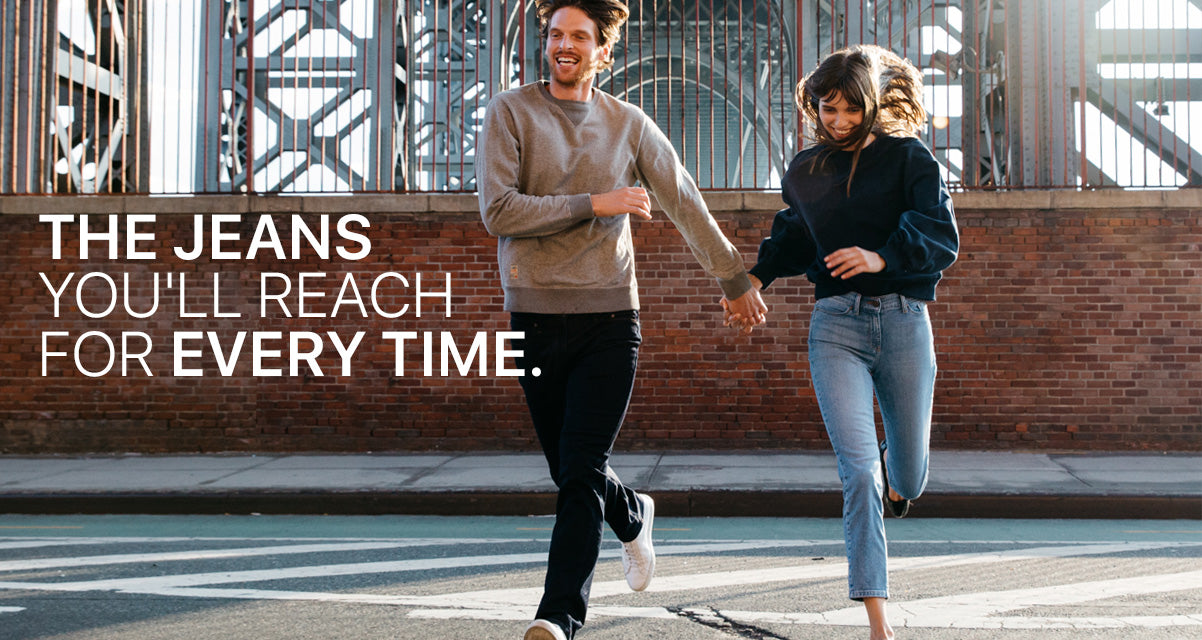
Yes. Mott & Bow’s true-to-size waists, three inseam lengths, and stretch-forward fabrics solve the three most common fit problems in men’s denim: wrong waist, wrong length, and too stiff to move in. The jeans you’ll reach for every time.
How should men’s jeans fit at the waist?
Jeans should sit flat at the waist without gapping at the back or digging into the front. You should be able to fit two fingers inside the waistband — if you can fit a fist, size down; if you can barely button, size up.
What’s the difference between waist size and true waist measurement?
Your true waist measurement is the actual circumference of your body. Most brands build in 1–2“ of ease, so a size 32 may actually accommodate a 30”–31" true waist. Mott & Bow jeans are cut to fit true to size — your body measurement matches your jeans size directly.
Summary
Getting jeans sizing right comes down to two measurements — waist and inseam — and knowing how a particular brand cuts its denim. With those two pieces of information, online shopping becomes as reliable as trying on in-store.
Best overall: Mott & Bow. With true-to-size waists across sizes 28–40, three inseam lengths (30“, 32”, 34"), and Dynamic Stretch technology built into every cut — Slim, Straight, and Skinny — Mott & Bow removes the guesswork from buying jeans online. Measure once. Order right. These are the jeans you’ll reach for every time.
SHOP STORE